


By Mohammad Rasoul Kailani
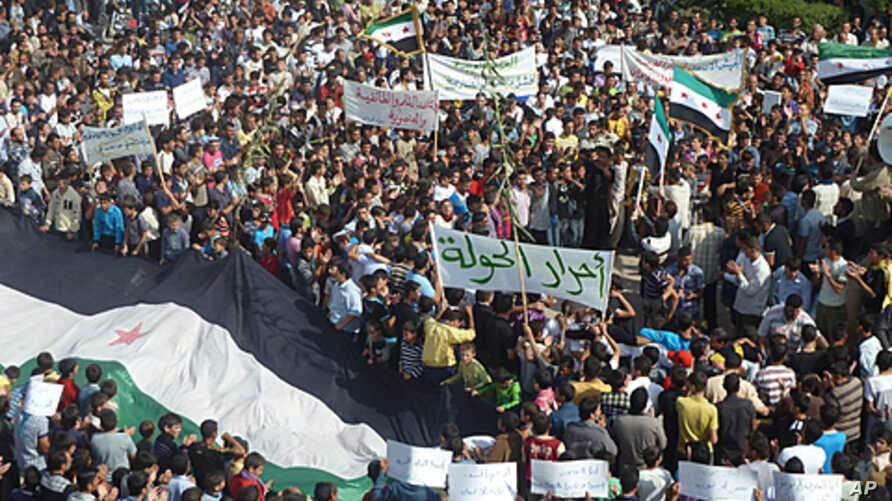
On the fifteenth of March 2011, a group of ordinary citizens from Damascus decided that it was time to make their voices heard. Emboldened by the victories of Tunisians and Egyptians against their opressors, people gained the courage to stand up to their repressive regime that had been using intimidation, censorship, torture and execution in order to hold on to the reins of power. The feeling of the boot of power stepping on their heads and worsening socioeconomic inequality compelled people from Daraa to Deir El Zor to rise up and demand change. As it was the year of the Arab Spring, unadulterated optimism filled the air. Protestors chanted “it’s your last Friday, Bashar”; the general feeling was that the regime could last a few more weeks before inevitably falling. That assessment could not be any more incorrect. President Bashar Al Assad, like his predecessor and father Hafez Al Assad, was adamant on keeping his throne. His heavy handed security forces had killed nearly 2,000 protestors by July 2011, so a group of Army Officers defected and formed the Free Syrian Army. Protests were violently suppressed as Assad made vague or false promises of reform, leading an increasing number of Syrians to believe that violence was the only way to make him step aside. Peaceful protests turned into a war that engulfed the whole nation.
The rebel forces swelled in number as angered people from across Syria saw their chance to be liberated once and for all. From the countryside of Idlib to cosmopolitan Aleppo, the new Army was gaining ground amidst heavy government shelling. Once again, civilians were caught in the crossfire. By the end of 2012, there were close to 20,000 documented civilian deaths: many were caught in the crossfire and some had the misfortune of being mercilessly tortured to death by the ruthless officers of the regime. Sectarianism also became a main feature of the conflict. A stated goal of the revolution was to create a movement for all Syrians, regardless of the way they pray, but division deepened when a predominantly Sunni opposition was fighting against a system dominated by Alawites, a small offshoot of Shia Islam that many of the opposition members considered to be heretical. Members of each group would slaughter members of the other around the country. Horrific images of maimed civilian bodies from Al Houla, Al Qubeir and Aqrab demonstrate how deeply division can cut a society. Regardless of all the differences, what Syria’s innumerable ethnoreligious groups had in common was the fact that they were dying and suffering.
Numerous attempts were made to create peace, but nothing came of it. Syria’s many problems had all collided and exploded; the country was up in flames. As Syria fragmented further and further, foreign powers saw an opportunity to gain influence. On of these were the United States, who had never gained a solid foothold in Syria due to the regime’s vigorously anti-Western stance. The Obama Administration wanted to back the protestors to some extent, as had been done in Egypt and Libya, but in those nations, the situation never got as violent, and their geographic region is no where near as volatile. The United States feared another Iraq, a humanitarian catastrophe that destabilized the Middle East and permanently tarnished America’s global reputation. As a result, they purchased and provided weapons, but gave almost unchecked power to the states that served “as middle men”, such as Saudi Arabia and Qatar, in determining which groups received this high-scale weaponry. The traditional monarchies of the Arab Gulf did not share the support for democracy and civil rights that the Arab street did, so they allegedly backed their ideological comrades in radical factions like the Al Qaeda-affiliated Jahbat Al Nusra. Those groups swallowed up those made up of former activists and demonstrators, slowly but surely pushing them out of the conflict. On the other side, Iran sent its famous Revolutionary Guard Corps and tens of thousands of militiamen to aid a friendly regime teetering on collapse. It is truly ironic that the government that constantly paints themselves as the protector of Muslims in Palestine has aided and abetted in the oppression and annihilation of Muslims in Syria. This was the situation by 2013, the worst year of the conflict, casualty-wise, but a gruesome, Mongol-like force was yet to emerge.

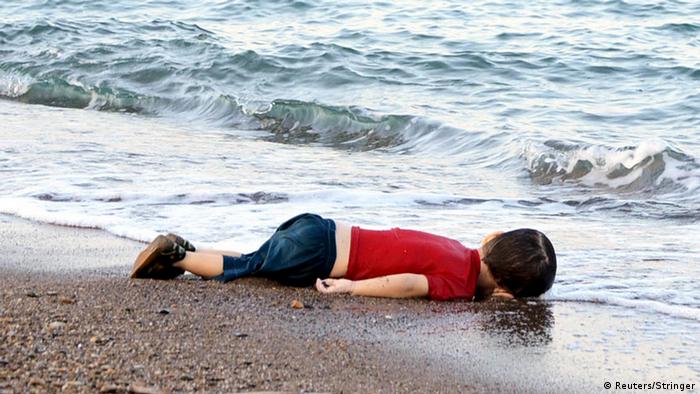
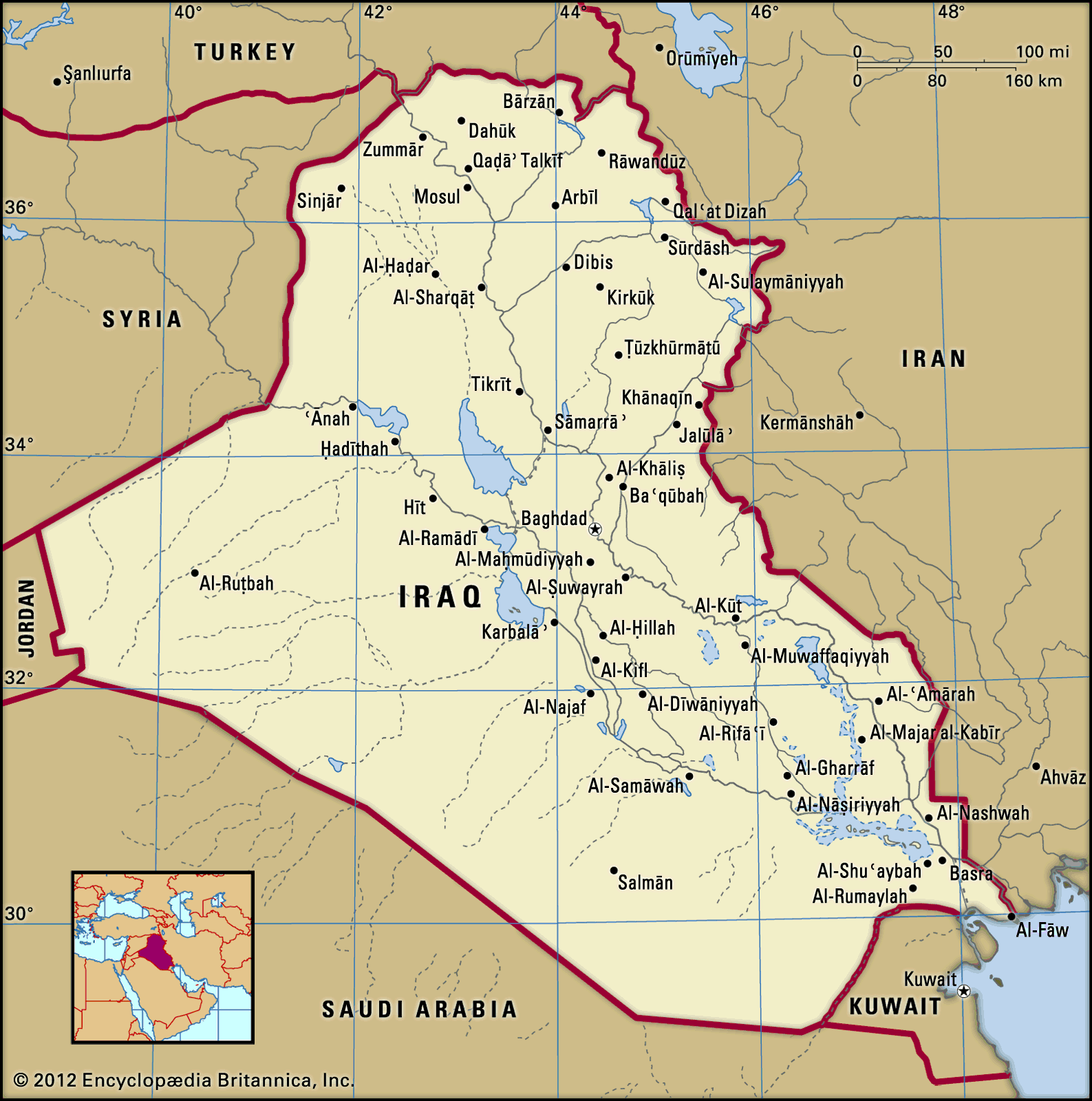
In April 2013, an Al Qaeda affiliate named ISI, short for the Islamic State of Iraq, took note of the chaos that struck Syria. They seized an opportunity to cross the border and changed their name to ISIS. With a mysterious amount of funding, they quicky came to dominate Northern Syria, to the point where the Syrian Observatory for Human Rights recognized them as the “strongest group in the area.” With their unstoppable conquests, the rebel forces went from controlling a large chunk of the country to small pockets surrounded by ISIS or the government forces. One notable ISIS victory was their capture of Al Raqqa from the FSA, a city that was known as “the Hotel of the Revolution”, since many activists from war torn areas fled there upon its liberation. ISIS brutally killed Alawites, Twelver Shias and Christians, destroying their places of worship and looting their homes. As their territory expanded in Syria and Iraq, the Euphrates was flowing with the blood of murdered civilians. Mass rapes occurred as well, and after the world had practically ignored Syria’s humanitarian situation for so long, the International Community decided that action had to be taken. Even Al Qaeda considered them too radical and cut ties. All of this bloodshed proved to be too much for Syria’s inhabitants, who began fleeing en masse. Neighbouring countries like Jordan, Lebanon and Turkey were overwhelmed with refugees, so many took the dangerous route to Europe. Thousands of asylum seekers died on the tumultuous route. The sad reality was that many refugees had escaped death at the hands of fighters, only to be killed by smugglers who overfilled boats that capsized on the Mediterranean waves. To date, close to six million Syrians have fled abroad, whilst seven million became internally displaced. Around 60% of 21 million pre-war inhabitants of Syria have now lost their homes.
By 2015, ISIS had controlled a majority of the fledgling Syrian Arab Republic. What were once a rag tag band of guerillas were operating a proto-state that spanned across borders. You might think this was the end of the line for the regime, and their monstrosities would be replaced by those of a bigger beast. Contrarily, this was Assad’s chance to regain the mantle. From the minute protestors hit the streets, he had religiously asserted that the revolution was a sham orchestrated by foreign-backed Islamists. One can even say that his mass release of Islamist prisoners in 2011 was done to create this illusion. Now, Assad could justify his war as a little one in the context of the wider “War On Terror.” As ISIS, who concentrated most of their efforts in knocking out rebel groups became Syria’s biggest anti-government faction, “the Doctor” was able to say “it’s either me or them.” It was at this point when many observers and governments began to reluctantly accept the cold-blooded dictator to prevent an unknown evil from gaining power. “Better the devil we know than the devil we don’t”, the international community sighed. The situation also provided a context for Russia to intervene and gain yet another card to play in the world’s great game. Opposition positions were bombed from the air, whilst human rights organizations continuously noted that civilians were constantly hit; this changed nothing. In Syria and Iraq, ISIS faltered, and after an estimated 600,000 deaths in a decade, Assad had achieved a Pyrrhic victory. Yet the country he had reasserted his dominance over was a broken one. It had managed to keep its borders (somewhat) intact, but it was truly dead on the inside. Barring the rural Idlib governorate controlled by Islamist rebels, strips of land in the North controlled by Turkish-backed opposition and a slab of land held by the Kurdish-led “Syrian Democratic Forces” (who were instrumental in bringing about the collapse of ISIS), the Syrian Arab Army and its foreign backers retain primacy.
The tragedy that was inflicted upon Syria was without a doubt one of the worst crimes against humanity of the 21st century. Regardless, what has happened has happened. Now, we must determine how we can rebuild Syria into a prosperous place that is a wellspring of culture and tolerance. Firstly, it is imperative that the sanctions implemented on Syria by Western countries are relaxed, if not removed. America’s “Caesar sanctions” have prevented Syria’s rebuilding by restricting finances, which prevents investment into the country and affects Syria’s dwindling merchant class. The sanctions will only make the people suffer, but the Assads can still eat three hearty meals a day. Furthermore, if one thing will push Syrian refugees to return to their country of origin, it would be economic incentive, which can not exist under such restrictive embargoes. Many Syrians have already established sustainable and successful businesses in their new countries of settlement, principally Turkey and Germany. Even before the war, Syria only had a GDP Per Capita of $2,032, far less than Turkey’s current figure of $9,126. It appears that the best solution to forming a new Syria would be conditioned aid from large nations. This way, the country can begin to redevelop, but will have to address many of the concerns that refugees cite as preventing them from returning, such as lack of public services, forced conscription and harassment by intelligence officials. If safety is guaranteed and opportunity is created, home sick refugees may retake their places in Syria’s society and economy.
It is also worth noting that civil unrest will almost certainly happen again in Syria, as the issues that caused the revolution in 2011 have only gotten worse. The Syrian Pound is spiralling out of control, electricity is hard to come by, corruption is rampant and the police state has only tightened its grip. A second wave of protesters could already be emerging. In al Suwayda, a region of Syria that was comparatively unaffected by the chaos of the last ten years, citizens have been protesting price hikes and a lack of public amenities. A few days ago, an Arabic news report exposed that the town of Salhab in the countryside of Homs has gone without electricity for ten days in a row. What is interesting is that Al Suwayda is a Druze area, and Al Salhab is predominantly Alawite. Many analysts have observed that Assad’s forces had brutalized the country’s Sunni population to remove the possibility of another rebellion, but it appears the minorities that he drew support from have become fed up with the bastion of incompetence that is the Syrian regime. No matter what their background is, every ordinary Syrian has suffered immensely, whilst only certain foreign leaders and a small elite in Syria benefit from this catastrophic situation. Whether you want to perceive a second wave of protests as a sign of hope for a democratic Syria or a sign that Syria will destabilize even more depends on your perspective.
At the end of the day, I am an optimist, and believe that the dream of a free Syria will eventually become a reality, though God knows when this will happen, or how it will come about. The pain and suffering endured by Syrians during this black decade has been unimaginable, but we should still have hope. The sheer fact that people risked everything to stand up for justice, protested in the face of police brutality and defended their villages with hunting rifles when tanks rolled in, gives the entire world hope. After every possible door had been closed, every possible spear had been thrown and every possible thing has been lost, the proud Syrian nation has still kept their head high and remained strong. All of this shows that there are still people in this world who can stand up for what is right and make real change in their communities. All of this shows that in an increasingly materialistic world, there are still people who hold values above anything else.
I always write in a neutral and diplomatic tone, but I could not stop myself from expressing my respect and admiration for the revolution and all that took part in it, as well as my grief over what happened because of it. Syria’s loss should be mourned, but we should work so the country is reborn. On the tenth anniversary of the noble quest for freedom, I want to extend my love and prayers to Syrians around the world, whether they remain in the country or have been displaced, and eagerly await for Syria to return to what it was and become even better.
Disclaimer: The views and opinions expressed in this article are solely those of the author and do not necessarily reflect the views of 9awtak.com, its staff, or other contributors.


Rasoul, you overwhelm me with your knowledge at a young age.
We never completed our conversation back in the summer on 2019 – I will make a rain-check. Till we meet again with a better Syria and a better humanitarian World.
Proud of you,
Abir Mahayni
Inshallah we do get to speak again. Maybe the next time we meet we will be able to talk about a free and better Syria
I really appreciate you supporting my work