

What’s Happening and Why’s It Happening?
Though Sudan is an ancient land plentiful in resources and rich in fertile soil, the last fifty years of its history have been marred by corruption, tyranny and civil war. Sudan’s history since independence consists of brief attempts at achieving democracy sandwiched between long and brutal dictatorships. At the end of 2018, the Sudanese people fought for their freedom once more. After weeks of protests against the war criminal dictator Omar Al Bashir, the military intervened and seized power. By June 2019, protests continued demanding a civilian government. Soldiers of the Transtional Military Council, commanded by General Mohammed Hamed Dagalo (known as Hemedti), invaded the camp site of the protestors, killing and raping hundreds.
Nonetheless, attempts at installing a civilian government slowly continued, and the goal of free and fair elections remained in sight. That was until the October 2021 coup, where the leader of the TMC, General Abdul Fattah Burhan, seized power and put Prime Minister Abdalla Hamdok under house arrest. Under local and international pressure, he eventually released the Prime Minister and promised to continue the transition to democracy, yet rarely let civilians into administrative positions. Recently, the march towards liberty has been met with its biggest roadblock.
Hemedti’s force is called the Rapid Support Forces. It is a more organized reformation of the Janjaweed, a militia dominated by Arab tribes which assisted Bashir’s regime during their war on Darfur. There, his militias committed a wide range of war crimes, leading him to be accused of having more blood on his hands than any man in Sudan. Hemedti uses his tribal connections, his experience as a commander and the vast mineral wealth seized in Darfur to recruit and maintain an army of 100,000+ soldiers. Upon robbing Darfur of its gold, Hemedti set up a company called “Al Junaid”. Not only is it the biggest gold exporter in Sudan, it has branched out into everything from iron and steel production to car rentals. Now one of the richest men in Sudan, he is attempting to utilize his clout to seize power in the country.
Amidst disputes between Burhan and Hemedti and the need to develop real institutions in Sudan, Burhan’s government has attempted to integrate the RSF into the regular Armed Forces. Resistance from Hemedti in this regard has led to the current clashes. As of now, hundreds have died as both sides fire mortars and shoot across the capital. Hundreds of thousands are internally displaced as the number abandoning the country completely increases in tandem. Though this is a dispute between two military factions, members of civil society and relief organizations have been targeted. This violence is a severe threat to Sudan’s democracy and the country’s stability itself. It is up to the international community to determine whether Sudan’s revolution is a shining example of success or another transition that ends in Civil War.
What’s important to note is that the Sudanese people have no dog in this fight. Burhan, like Hemedti, seeks to curb civilian aspirations any chance he gets, and much like neighbouring Egypt, Sudan’s army is the country’s biggest economic force. In spite of the protest’s popularity, the power imbalance between Sudan’s weak institutions and the armed goons means the democracy movement doesn’t have much to stand on. Both figures are reincarnations of Bashir and what he represented, giving the revolution a pessimistic outlook. If the situation in Sudan makes it hard for democracy to develop, the regional situation makes this almost impossible.
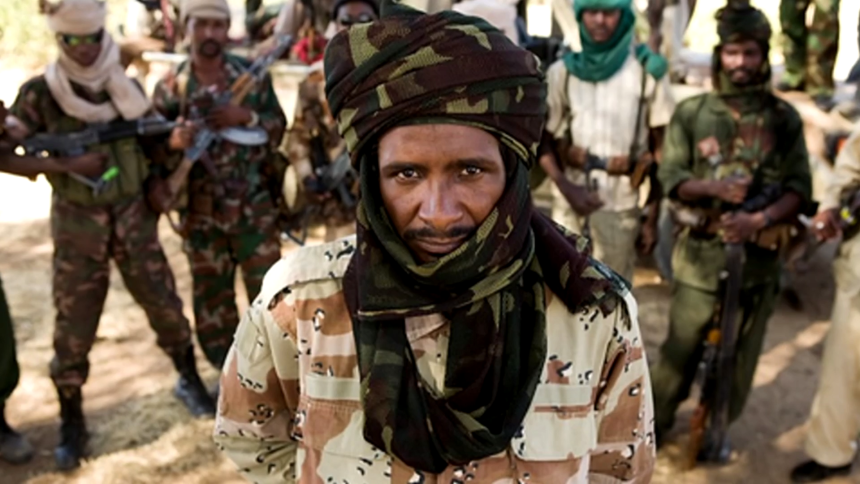
As a nomad from the country’s periphery with no education, Hemedti comes from outside the country’s power structure. However, he has utilized his military prowess and tribal connections to elevate his status. (Photo: Daily News Egypt)
A Rough Neighbourhood
Sudan’s strategic location and abundance of resources means that any conflict in the country will attract foreign intervention. In this case, the biggest players are from the neighbourhood. Burhan’s largest backer is Egypt. On the surface, it is quite logical. Sudan exports cheap goods to Egypt. It also serves as a buffer against Ethiopia, with whom Egypt has a tense water dispute that can become violent at any moment. This means Egypt must maintain the existence of a stable and friendly regime in Sudan. It is interesting to observe that while Egypt usually follows the lead of other countries in other foreign exploits (e.g, following Saudi Arabia in Yemen), it is the proactive party when events flare up along its own borders.
Talking of foreign exploits, Hemedti’s biggest sponsor is the United Arab Emirates. Of course, the manifest reason is economic interests. Emirati companies own large tracts of Sudanese land, and most of Hemedti’s grimey gold cash is stored in Dubai. In exchange for raw resources, the UAE has been providing Hemedti with advanced technology and weapons, including thermobaric bombs. For both sides, there is an ideological paradigm for intervening. The underlying reason for Emirati intervention anywhere, be it in Libya, Palestine or Qatar, is to prevent Islamism from taking hold. There are allegations that Burhan is willing to bring back the Islamists, who formed the political backbone of Bashir’s regime, back into Sudan’s government. The recent release of important members of the old regime by the Burhan government lends credence to these claims.
That being said, the main idea behind Egypt and UAE’s continued influence is ensuring that Sudan never becomes a democracy. Any example set of a successful democratic government in The Middle East sets an example for other countries, especially in a region as culturally connected as the Arab World. The 2010-11 revolution in Tunisia set off protests all over the Arab World’s and Sudan’s protests inspired civil action in Algeria, Lebanon and Iraq. Any real Arab Democracy is a fundamental threat to the iron-fisted autocratic governments in the region. This is especially the case for Egypt, which shares a lot of parallels with Sudan. Both have booming populations and facing living crises. While their societies are under existential threat, the military and a few wealthy backers hoard the wealth of the populace. If Sudan’s people can do it, it will prove that Egypt’s people can do it, something that President Sisi and his Gulf Arab backers will fight tooth and nail to prevent. The intervention in Sudan is just nipping it in the bud.
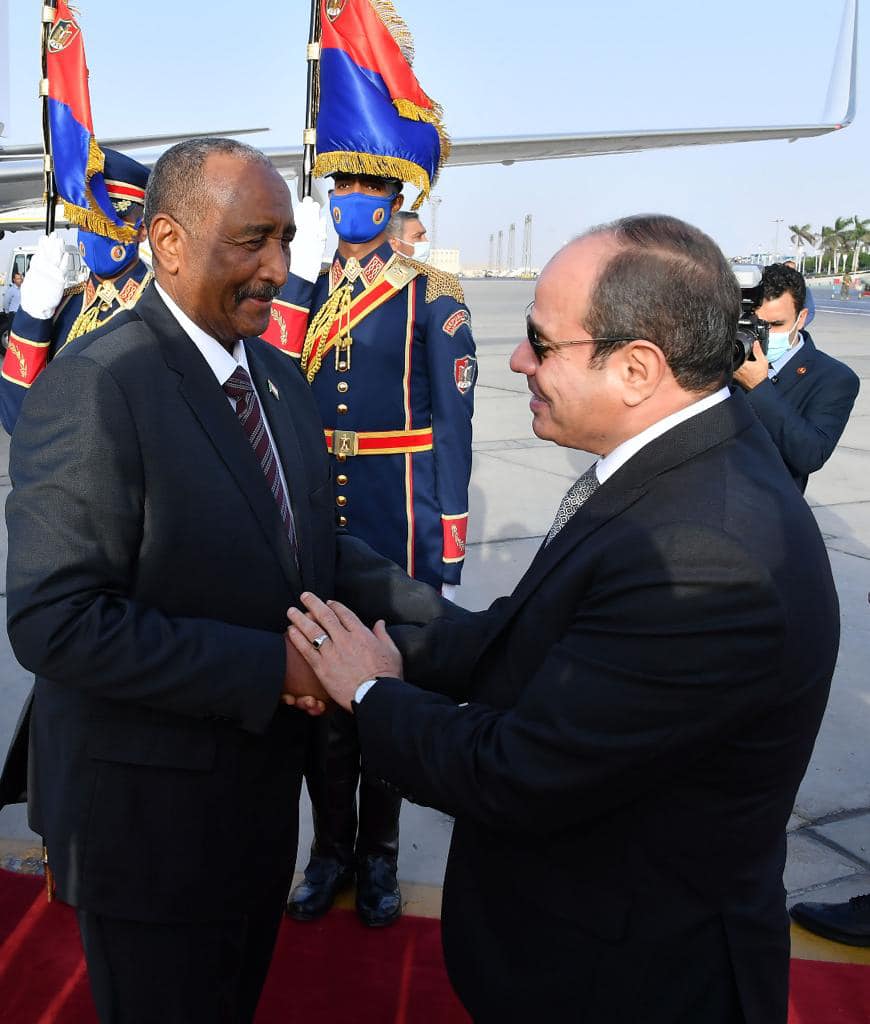
Egypt is Burhan’s biggest backer. Ensuring the Sudanese Regime’s presence is important for Egypt’s strategic goals, as well as their own regime’s survival. (Photo: Egypt Independent)
Can we Save Sudan?
So, is there no hope for a new Sudan? False: in spite of all the difficulties, Sudan’s freedom movement can come out victorious. The protestors have brought the country to a standstill and previously reversed the results of a coup. Some countries may back the military strongmen using the stability argument, but how can Sudan ever be stable if the people detest their leader? The people know they are capable of moving mountains. Even if a new military regime takes over, it simply can not act the way Bashir did without firm resistance. The other point to note is that global powers have a vested interest in a stable Sudan. Here “stable” means possessing functional institutions that are capable of keeping its population happy, not mowing down popular discontent with brute force. It would greatly benefit the International Community if they ensured no Civil War erupted in Sudan ever again.
A mix of climate crisis and the war in Ukraine has meant the world is reckoning with inflation and food shortages. As Russia and Ukraine cannot keep the market for grain afloat, the world needs a new provider. Sudan has the potential to serve as a replacement. A combination of lush soil and an equatorial climate means 45% of the Arab World’s arable land is located in Sudan. Arab countries have already bought swathes of land, especially Gulf States with arid landscapes. In our current day, much public discontent is stemming from food shortages, meaning that transforming Sudan into a breadbasket is important for the International Community.
The issue of migration is also a priority for The European Union. Western European States cooperate with some North African states in the “Khartoum Process”, which ostensibly aims for cooperation and dialogue in regards to irregular migration across The Mediterranean. Criticism has been levied against it, stating it cooperated with Libyan militias who captured and mistreated migrants. Nevertheless, a collapse of the Sudanese state spells bad news for the process. If the country’s borders are not secured, we could see another Libya situation where migrants use Sudan as a gateway for migration northwards.
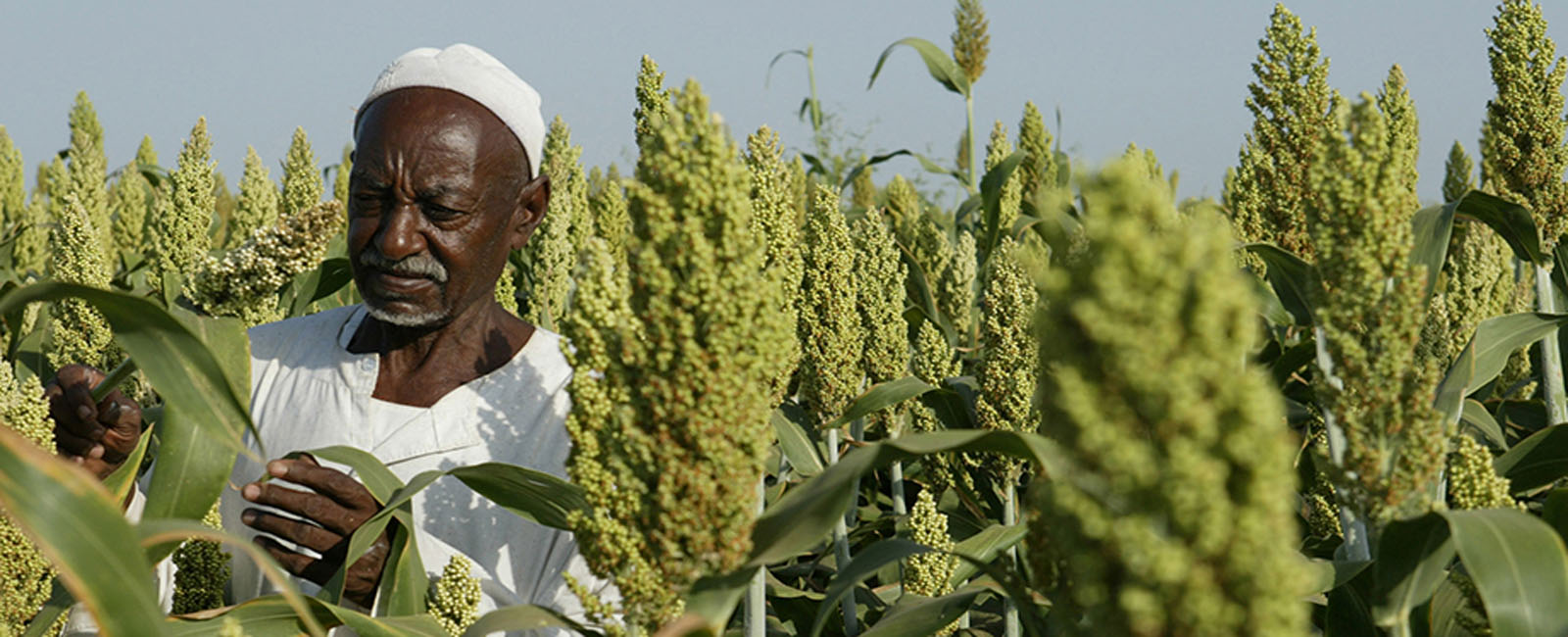
A Sorghum farmer in Sudan. The potential for Sudan to feed entire nations incentivizes the Global community to resolve this crisis. Early democratic leaders of Sudan pursued the breadbasket dream, but constant coups and wars crushed this. (Photo: Sudan Now)
Our Great Test
It is clear, then, that international stakeholders have a vested interest in resolving this conflict. The only way to do this in the long term, where another armed tyrant does not repeat the cycle of violence, is to encourage a civilian government in Sudan. Reinvigorating democratic institutions and keeping the military in check ensures the long term development of Sudan so that warlords can no longer jeopardize the country’s future. As one of the largest Arab and African countries, the most tactical move for global powers would be to create a politically liberated and economically prosperous Sudan. Western countries need grain and a buffer against migrants, and China has been seeking to integrate Sudan into the Belt and Road initiative. Even Russia has heavily invested in Sudan since the revolution.
If not for geopolitical goals, then the world should put its foot down for the sake of humanity. The militias on Khartoum’s streets have been accused by the International Criminal Court for their crimes in Darfur, so who’s to say they won’t do the same elsewhere? In spite of massive cruelty and countless human rights abuses, the Sudanese people have asserted their right to self rule time and time again; if we were to ignore their desires in favour of oppressors, what does that say about us? If we want a stable and just Arab World, and a stable and just Africa, then we must do what’s right in Sudan.
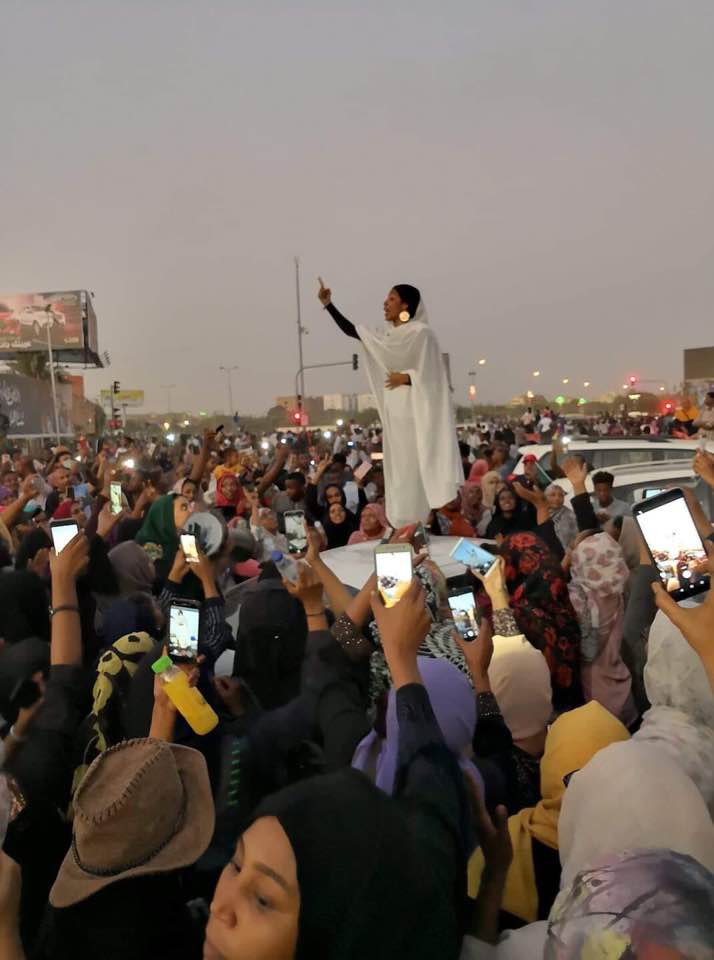
Photo Credit: Sudanese Photographer Lana Haroun