

By Pamir Gurler and Mohammad Rasoul Kailani
What Happened?
On the 14th of May, Turkey held a nail biting general election considered critical for the country’s future. Incumbent President Recep Tayyip Erdogan started his 20 year rule with great economic and political developments, but the last few years have consisted of skyrocketing inflation and widespread corruption. Nevertheless, the glorious early years and a cult of personality ensures Erdogan maintains a strong base of support. This group of Turks, primarily rural and religious, allowed Erdogan to win 49.24% of the vote in the Presidential Election’s first round. Preventing him from reaching the 50% needed for an outright victory was Kemal Kilicdaroglu. A hardcore bureaucrat and leader of the secular, social democrat CHP (Republican People’s Party), he has forged an alliance of contrasting parties seeking the removal of Erdogan. His “peace and love” oriented campaign was triumphant in Turkey’s three largest cities: Istanbul, Ankara and İzmir. However, conservative voters from inner Anatolia and the Black Sea coast gave the current President the upper hand. With almost a 90% turnout, Turks from all provinces and political leanings proved that for them, this election is do or die.
The election’s results have thrown analysts off course. Opinion polls and articles had Kilicdaroglu in front, especially with the expectation that provinces in the Earthquake Zone would switch to the opposition. Yet aside from the more urban Adana and Kurdish Diyarbakir, Erdogan won resounding victories in the earthquake zone. In Kahramanmaras, the epicenter of the quakes, more than two thirds of voters remained loyal to Erdogan. However, surprises were not limited to the presidential election. The “People’s Alliance”, made up of the ruling AKP and the MHP, a far right nationalist party, took 319/600 seats in parliament. Though Anglophone media failed to predict this, Turkey’s interior minister did state he expected his alliance to win 320-25 seats. From an ideological standpoint, the election showed a large trend towards Turkish nationalism. 20% of parliamentary votes went to nationalists, and when the AKP dropped seats, a strong showing for the MHP carried them to a majority.
Nationalist sentiment also shaped the outcome of the Presidential vote. Towards the last week before elections, citizens began showing some affinity for the third candidate, far-right Sinan Ogan. Surely, with only a month of campaigning, he collected 5% of the vote. This puts him in the kingmaker position for the run-off vote. As of late, he has declared his support for Erdogan, but this does not mean that all of his voters will flock to the aging President. After all, why vote for a third party if you’re happy with the current system? Ogan would declare his support for whoever candidate takes a hard stance against the PKK, and Kilicdaroglu’s alliance with Turkey’s Kurdish parties did not put him in an ideal position here. However, he is tougher on Turkey’s migrant situation than the incumbent, another valence issue amongst voters. Below, we will analyze why the election went the way it did, campaign strategies the two competitors may utilize and the way Turkey’s future may look after the 28th of May.

Sinan Ogan, who was not expected to obtain more than 3% of the vote, finished with over 5%, placing him in a kingmaker position. Ogan’s strong performance is representative of the Turkish public’s drive towards nationalism. (Photo Credit: Middle East Monitor)
Kilicdaroglu’s Campaign: An Analysis
In spite of Turkey’s secular constitution, Kilicdaroglu’s religion was brought up in the course of the campaign. He is an Alevi in a Sunni majority country; what an Alevi is is up to interpretation. With a different set of beliefs than mainstream Sunni and Twelver Shia Muslims, Alevism is generally a combination of Twelver and pre-Islamic shamanistic ideas, with elements of Sufism sprinkled in between. Its historic marginalization means that it is not structured, which means Alevi practice can differ from province to province. In fact, some see it as a mere cultural identity, rather than a religious one. The point here is that the Alevi’s heterodox beliefs and exclusion from Turkey’s power structure means that an Alevi candidate was somewhat controversial
Addressing this, Kilicdaroglu posted a video to his twitter titled “Alevi”, where he spoke proudly of his heritage, and confirmed he is “a sincere Muslim raised in the faith of Prophet Muhammad and Ali”. The video, viewed over 100 million times, presents a contrast to Erdogan, whose Sunni identity is a central part of his public image. While Kilicdaroglu’s message of tolerance was popular in urban and secular parts of Turkey, conservative voters in the country’s interior may have been hesitant to vote for an Alevi. As important as religious tolerance is in Turkey, the focus on Kilicdaroglu’s religion may have hurt his campaign. Though unfortunate, the politician from Tunceli would have been better off not talking about religion at all, which is the traditional Kemalist approach.
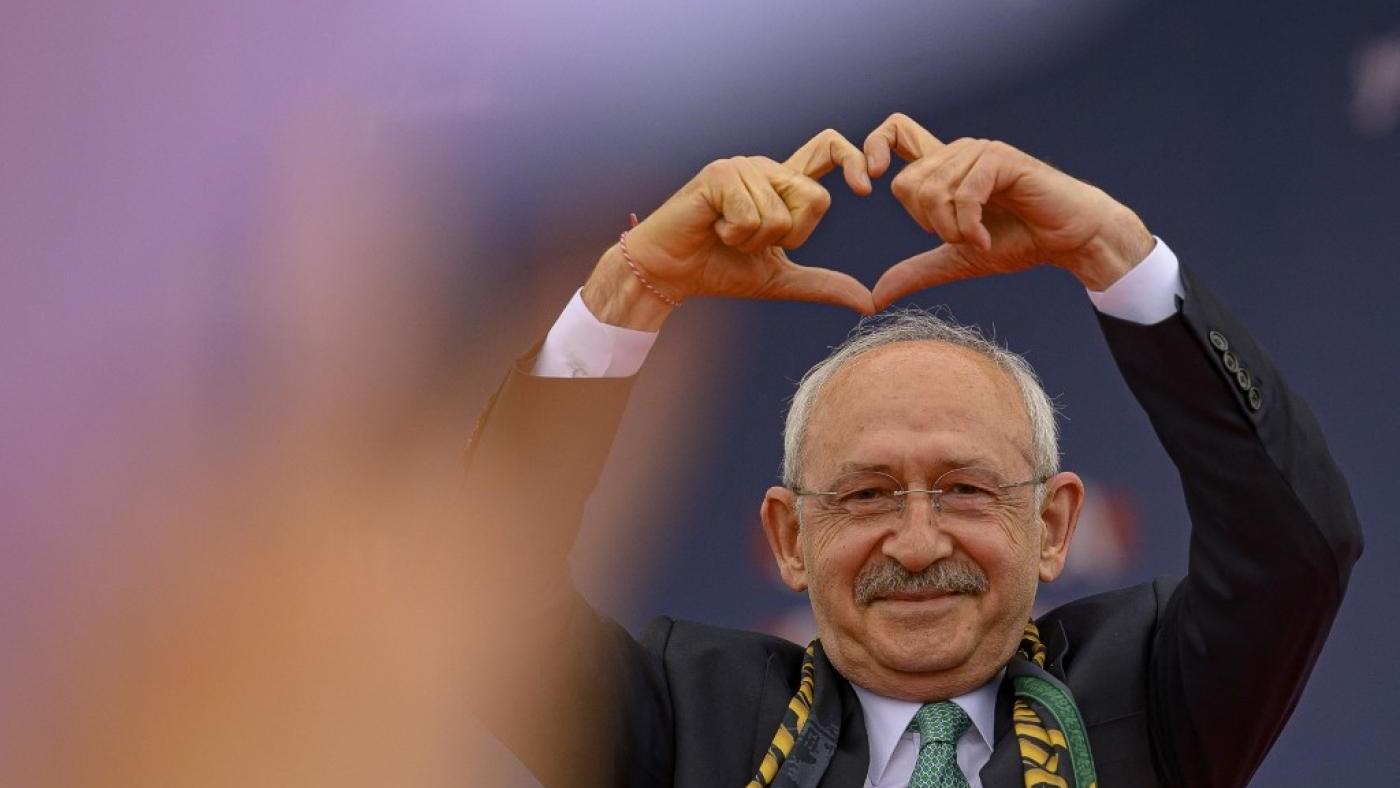
Kilicdaroglu’s campaign focused on coexistence and brotherhood between Turkey’s various ethnic groups and religions, which proved successful in the cosmopolitan cities, but not as much in the rural hinterland. (Photo Credit: AFP)
Erdogan, Man of the People
Erdogan, who has been a dominant figure in Turkish politics since the early 90’s is a master in public oration and winning elections. Coming from a religious rural family and growing up in the harsh streets of Istanbul, he is able to empathize with working and middle class Turks. He understands their frustrations, their sorrows, their hopes, their ambitions, and most importantly, what motivates them. His ability to capitalize on voters’ emotions has led to him remaining in power for the last 21 years.
This election is no different. With the introduction of Turkey’s first electric vehicle, TOGG, and the success of Turkish drones and weapons systems across many conflicts from the Ukraine-Russia War to Armenia-Azerbaijan War, Erdogan is able to play into the pride of his people. He understands the strength of emotion and capitalizes on this with slogans such as “If they have dollars, we have Allah” and “You [the Turkish people] won’t sacrifice your leaders for potatoes and onions”. Finally, Erdogan has successfully convinced the voters that Kilicdaroglu is a terrorist that’s allied himself with the HDP and by extension, the PKK, while eluding himself from the same “terrorist ally” argument thrown his way following his alliance with Turkish Hizbullah’s political wing, HÜDAPAR.
Overall, the clear difference between the two candidates could be seen on the last day of their 1st round campaigns. Erdogan ended his campaign with a prayer in the Hagia Sophia Mosque while Kilicdaroglu ended his by visiting Anıtkabir, Atatürk’s mausoleum in Ankara.
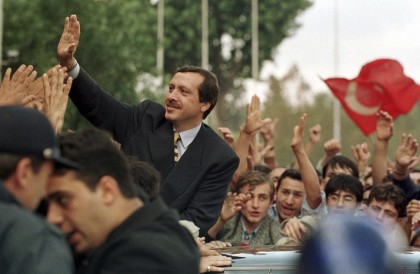
Erdogan greeted by supporters in 1998. When elected as mayor of Istanbul in 1994, Erdogan’s charisma, humble background and major reforms propelled him to political stardom and the role of Prime Minister in 2002. (Photo Credit: Murad Sezer, Associated Press)
Going Forward
It’s clear that the demographic that the candidates need to win over are right wing nationalists, whose two main fears are Kurdish separatism and the large influx of migrants entering Turkey, primarily from Syria, but more recently countries like Afghanistan, Pakistan and Iran. On the former issue, Erdogan definitely has the upper hand. The HDP, a Kurdish, leftist party often accused of supporting the PKK, has backed Kilicadorglu. Thus, Erdogan accuses his opponent of cooperating with terrorists day and night. The PKK itself is recognized as a terrorist group across the world, but whether the HDP cooperates with them is disputed. That being said, it’s best that “Gandhi Kemal” remains pacifistic on this particular issue. Regardless of the available evidence, he’s simply a mediocre orator compared to Erdogan, dubbed the “chief” in Turkey. It is unlikely he can make an elaborate speech justifying this, so it is best that he simply avoids discussing it.
However, one of the main factors harming Erdogan’s poll numbers are the large numbers of refugees and migrants in Turkey, which puts a strain on the already struggling economy. The only realistic way to court the nationalist demographic for Kilicdaroglu would be to orient his campaign around this issue, which he is already doing. He has made speeches blasting Erdogan’s liberal immigration policies, claiming the incumbent has “violated Turkey’s honour” and vowing to “send them (Syrians) back to their homes”. He has also cited a figure of ten million foreigners in the country, far off from the United Nations figure, which stands at 3,9 million. Will the inflammatory rhetoric work? It’s realistic to say yes.
A poll conducted last year shows 66% of Turks want Syrian refugees to go back to their homeland. Tensions between Syrian refugees and locals are highest in Southern Turkey, where Syrians comprise large percentages of the population and economic competition is fierce. Kilicdaroglu, who cites future projections of 30 million Turks (without any evidence) is exporting this anxiety throughout Turkey to gain votes. In a country that is uneasy about large numbers of foreigners and unsure of their true population, Kilicdaroglu may attract Ogan’s support base.
This sort of rhetoric can also expand Kilicdaroglu’s appeal beyond certain parts of the country. If the handling of the earthquake did not turn yellow provinces in the south red, perhaps a hard stance on refugees will. The evidence of the preoccupation Southern Turkey has with refugees lies in the result of the parliamentary election. The MHP collected a handful of seats in Southern provinces, even though many Turkish Arabs and Kurds inhabit this region. A Turkish nationalist ideology cannot appeal to this demographic; only contempt for refugees can. But this strategy is not foolproof. If Kilicdaroglu aims to flip over Erdogan voters with the theme of stopping refugees, he may not find much success here. One factor to note is that the same poll mentioned above showed most AKP supporters were AGAINST the proposition of sending refugees back.
Most of this pious voter group feels that sending Syrians back to a brutal dictator is contrary to Islamic values. Government officials have already expressed their desire to maintain a humanitarian approach. Interior Minister Suleyman Soylu has stated “We will not make Turkey a refugee warehouse, but the Syrians are our brothers and sisters. We cannot send them to die.” The President has also said deporting the refugees at once is not Islamic, instead citing a project to build homes for Syrians and progressively let them move back there. Compared to Kilicadorglu’s speech, this is a far more balanced approach between the Turkish public’s desires and international law. Religious voters in inner Anatolia will take this into account, and it may only reinforce their support for Erdogan.

Syrian refugee boys in a camp in Sanliurfa Province. Turks generally accepted Syrians with open arms at the onset of the Civil Wa, but economic deterioration has caused friction between refugees and locals, particularly in areas like Sanliurfa. (Photo Credit: Rauf Maltas, Anadolu Agency, Getty Images)
If the Hoca Overthrows the Sultan
With Erdogan winning by over two million votes last time around, Kilicdaroglu is fighting an uphill battle here. Yet the fact that this election even went to the second round, for the first time in Erdogan’s political history, shows he has a fighting chance. Arguably the biggest challenge would not be winning this election, but governing after it. His first job would be picking up the debris of a destroyed economy, a task in and of itself. Then, he has to reckon with the promise of reverting to a parliamentary system in spite of the disadvantage this poses for them. Will he uphold his commitment, or ensure he can do his job without obstacles?
The refugee issue is another issue in and of itself. The Nation Alliances’ Joint Consensus Text argues for a balanced approach in dealing with the migrant crisis. It calls for a renegotiation of the 2014 agreement between the EU and Turkey on the readmission of migrants and issuing biometric ID cards to migrants and refugees in Turkey to aid in the identification of undocumented migrants. It also pledges to combat human trafficking across the Turkish Border, lead talks with the Damascus government and UNHCR to ensure a safe and systematic return of Syrian refugees, leading Syria’s rebuilding efforts and incentivizing Turkish investment in Syria. This detailed plan differs from the immediate expulsions Kilicdaroglu promises in his speeches. It’s a plan that seems rational, but any rational resettlement of refugees is a gradual process, and for nationalistic Turks expecting a quick removal of Syrians, a slow process could be a source of frustration.
It’s worth repeating that Kilicdaroglu finds himself at the helm of a destroyed economy. Just in the last two months, the total reserves of the Turkish Central Bank have fallen by $25 Billion to a total of $101.6 Billion. Constant devaluation of the Turkish lira, coupled with rising cost of living have eliminated the presence of a working middle class. While the Joint Consensus Text outlines a radical plan to increase Turkey’s GDP to $600 Billion in five years and lower inflation to single digits within 2 years, the feasibility of such a plan is yet to be judged.
In essence, Kilicdaroglu is a merchant selling change to his people, but the product he’s selling is hard to obtain. If he does not sell his product immediately, the market dwellers may be frustrated and flock back to the old stall around the corner which sells the same old goods. Kilicdaroglu has five years to reshape the last twenty, and if he fails to do so, Turks may revert back to Erdogan’s party for a sense of familiarity.
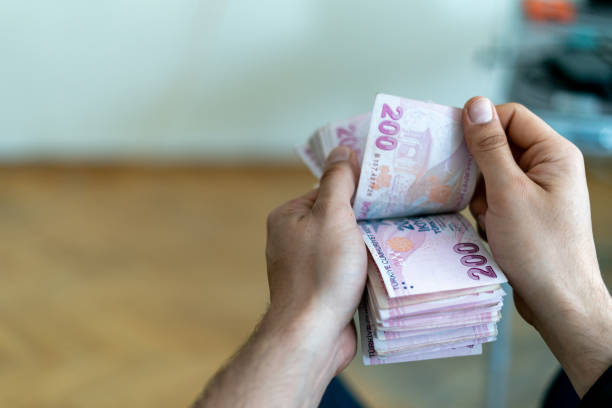
Stack of Turkish Lira. Though the Lira was once stronger than the dollar early in Erdogan’s rule, the exchange rate is now 20 Lira to the dollar.
If the Sultanate is Eternal
It’s not just that the election of Erdogan or Kilicdaroglu will alter Turkey’s path, how much Erdogan may win by will also have effects. The fact that he has gone to the run-off round for the first time in his life is a sign he has to curtail public discontent. Still, Sunday’s result will indicate how Turkey will be governed for the next five years. A slim victory would likely prompt Erdogan to relax certain restrictions on civil and political liberties. Given that he has lost the Kurdish vote that once propelled him to certain victory, he may roll back some of the ultranationalism his party has instituted in recent times. Moreover, survey after survey proves that the economy is the biggest concern of the common man, meaning Erdogan may reinstate economic orthodoxy in place of his no interest experiment.
A landslide election for Erdogan would mean the continuation of the government’s current economic and social policies. It’s probable that a landslide victory would signal to Erdogan that all is well and the populace is happy with their current situation. Economically, this would mean a continued run of high inflation as the central bank keeps low interest rates amid increased inflation, further fuelling the rising costs of living. Socially, it would mean keeping the status quo regarding the refugees and migrants, which could lead to increased tensions between the economically deprived Turkish population and refugees who lost everything to wars in their homelands.
Another issue that looms large is the question of civil liberties in an Erdogan regime. Recent years saw an increased absence of civil liberties and human rights. In the rule of law index published by the World Justice Project in October 2022, Turkey was ranked 116th among 140 countries and was 135th in terms of constraints on government powers. At the least, a landslide Erdogan victory would mean continued crack-downs on civil liberties. At worst, the fact that Erdogan did not win in the first round could be used for further silencing of anyone who opposes him.
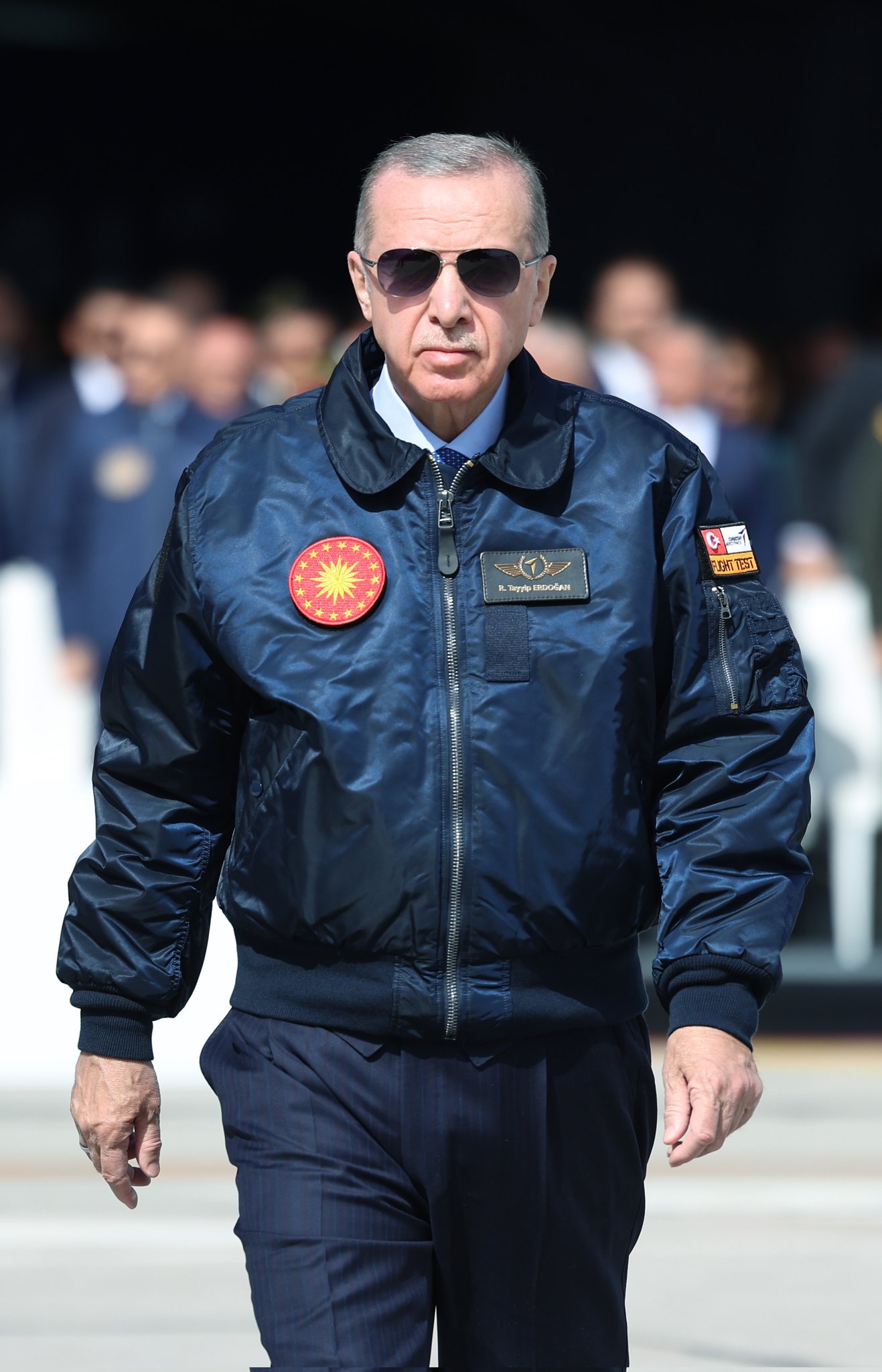
Erdogan wore a pilot’s jacket as he revealed new Turkish military aircraft while wearing a pilot’s jacket in the lead up to the election. There is no doubt that he is larger than life and able to inspire millions, but can he back up his words with actions? (Photo Credit: Press Office of the President of The Republic of Turkey)
Conclusion
The first round of Turkey’s elections revealed a lot about Turkey as a country. Foreign analysts love to talk about Turkey’s eternal dilemma between Islam and Secularism, “East and West” so to speak, but the real deal breaker is nationalism. Both government and opposition have utilized Turkish patriotism to their advantage, especially after the impact nationalists had in the vote for parliament. It’s the only issue that unites an imam from Trabzon and an atheist from Izmir. Some may use recent campaign strategies to state this patriotism is a tool for division, but it has proven to be positive in a few regards. The passion Turks have for their country has informed their decision to flock to the polls in overwhelming numbers. Participation rates in the Wests’ oldest democracies do not hold a candle to Turkey’s 90%. In spite of all the forks in the road, the Turkish people have shown their desire to shape their future democratically.
This election comes a full century after the Turkish Republic was founded out of the collapsed Ottoman Empire. From a country picking up ruins to one of the world’s most influential, Turkey has changed a lot. But the basics remain constant. There remains a constant conflict between the secular and religious, a fortified and defensive sense of nationalism and attempts at democracy in spite of internal and external obstacles. The 28th of May is crucial. The Turkish people will definitely be on the edge of their seats awaiting the results, but so will the International Community. The world awaits what’s in store for Turkey, the crossroads between continents and the pioneer of democracy in The Middle East.
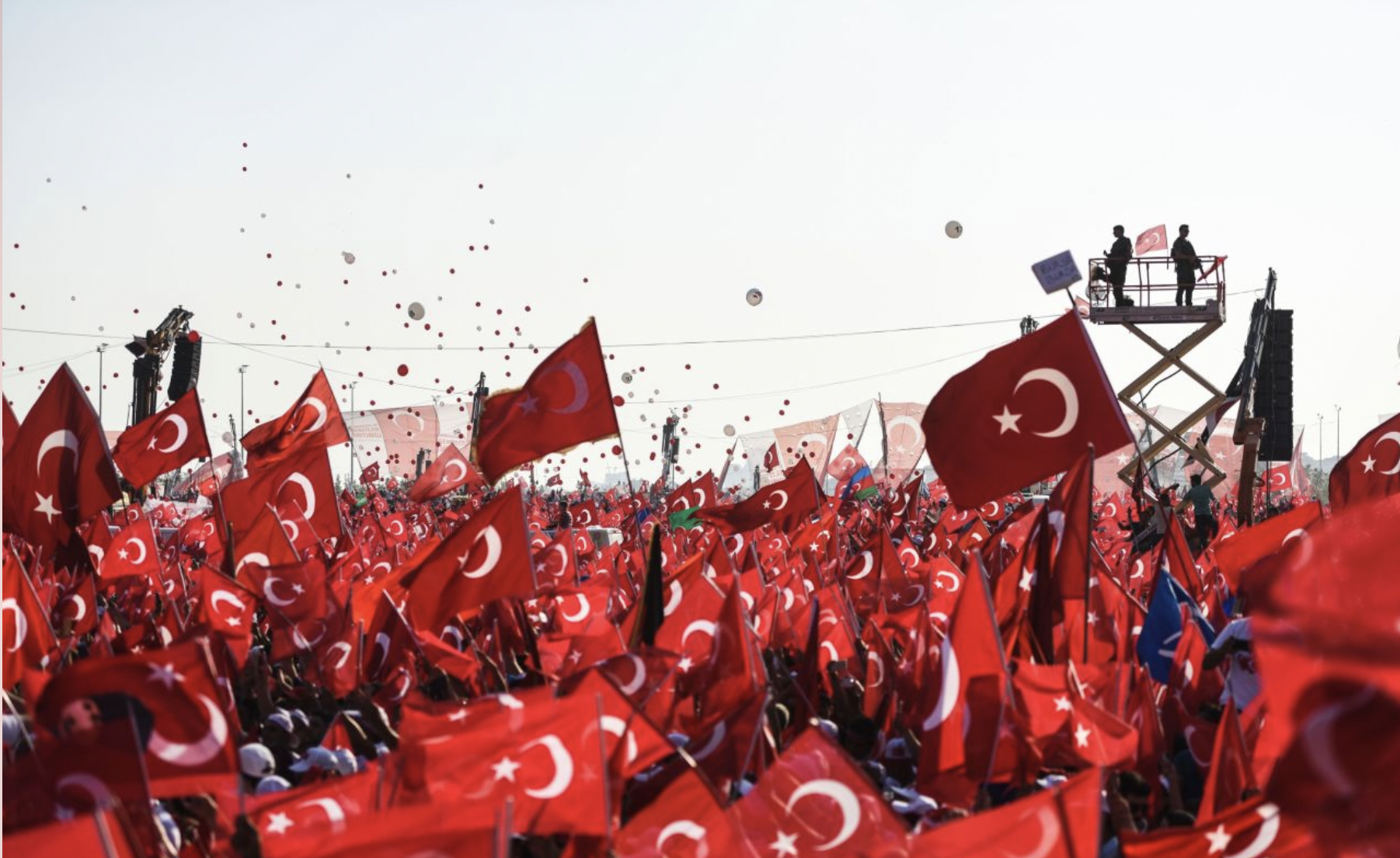
Photo Credit: Bulent Kilic, AFP
About the authors: Pamir Gurler was born and raised in Ankara until his family emigrated to Canada in 2012. He completed his secondary education at Iroquois Ridge High School and is now a student of genetics and immunology at University of Toronto.
Mohammad Rasoul Kailani is a nineteen year old Jordanian-Canadian student studying Peace, Conflict and Justice at The University of Toronto. He has written about many topics on various websites, but primarily focuses on Middle Eastern affairs.
Disclaimer: The views and opinions expressed in this article are solely those of the author and do not necessarily reflect the views of 9awtak.com, its staff, or other contributors.