

By Mohammad Rasoul Kailani
Thumbnail Photo: Burak Kara, Getty Images
Background
On May 14, Turkey will have its most critical elections since Mustafa Kemal Ataturk defied the world by founding the Turkish Republic. Ataturk drastically reformed former Ottoman Anatolia in the image of a European state. Some of these changes were heavily praised, while some remain controversial to this day. However, no one could deny that Turkey was now a strong state with strong institutions, as opposed to its neighbours to the south that fell victim to colonization. When the founding father passed in 1938, the situation in Turkey fluctuated. Though there were good times, much of this period was marked by military coups which thwarted any attempt at democracy. Kurdish nationalism and leftism were trampled by the army boot, but it was Islamist ideology, popular with much of the Turkish public, that was the main target for the military regimes.
Ataturk founded Turkey on the principles of secularism and nationalism, and the military swore itself to be the guardian of the Turkish homeland and Laïcité. In fact, they were often stricter in this regard, going as far as to ban the hijab in public buildings. In the 1980’s, they even banned the Kurdish language entirely. On the political level, they had overridden many of the institutions Ataturk had created and snatched power away from the people. Power was concentrated in the hands of a small, secular, Mediterranean elite, while Turkey’s rural interior remained undeveloped. By the 1990’s, Turkey’s economic and social situation was miserable.
In comes Recep Tayyip Erdogan. Once mayor of Istanbul, the state had arrested him for reciting a religious poem. In 2002, he ran for Prime Minister and won in a landslide with the aid of the pious public, who largely originated from deep Anatolia. The first decade of his rule was an optimistic time for Turkey. Not only did it become an economic powerhouse, it had greatly expanded civil liberties and minority rights. Before Erdogan’s election, 4% of citizens were satisfied with the direction of their country. Ten years later, the figure had climbed to around 50%, a Pew Research poll found. Turkey had gone from “the sick man of Europe” to inching towards EU membership. Not only did many idolize Erdogan within Turkey, his regional popularity skyrocketed as Turkey began to build ties with Arab and Muslim states. When his term as Prime Minister concluded in 2014, he simply ran for President, and thus Erdogan, once a working class kid from the Black Sea region, has remained Turkey’s leading man.
However, good things don’t last forever. As Erdogan grew more popular, he slowly began to impede on civil liberties and arrest many on trumped up charges. When a coup attempt in 2016 failed, Erdogan took this as a cue to tighten his grip on the media. Today, independent media is lacking in Turkey, and the country is the second biggest jailer of journalists in the world. To preserve his rule amidst decreasing popularity, Erdogan has allied himself with an ultra nationalist party, the MHP. This strange combination has resulted in the reversal of many advancements for Kurds and their rights. On top of that, the economy is in shambles. There was a certain point during Erdogan’s term where the Lira was stronger than the dollar. These days are long gone; 1 USD now equals around 19.5 Lira. As the Turkish people feel the pressure on their housing and groceries, Erdogan feels the pressure in this upcoming election.
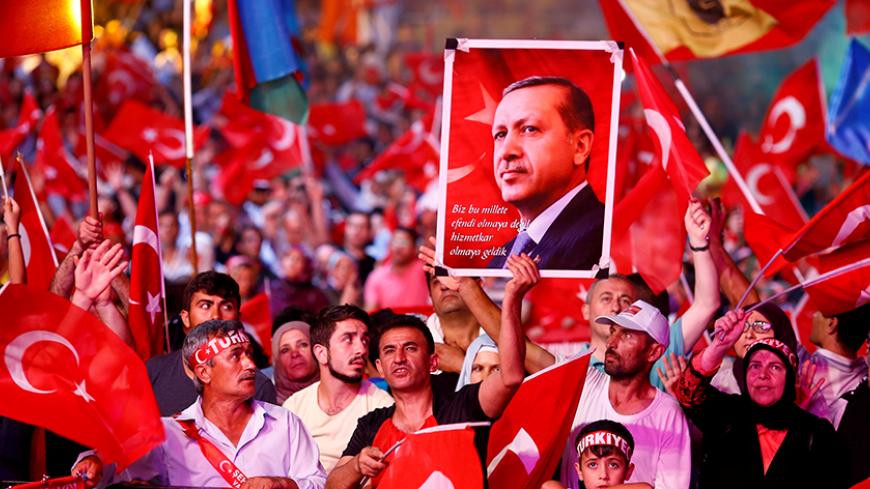
Erdogan supporters gather to listen to him speak in Taksim Square, Istanbul. In spite of the rough patch Turkey is going through, around 40% of the country has remained loyal to their President. (Photo: Osman Orsal, Reuters)
The Opposition
Part of why Erdogan has been glued to the Sultan’s throne through rain or shine is because the opposition in Turkey has been extremely ineffective in forming a coalition and appealing to the Anatolian segment of the citizenry. Up until recently, all the districts won by the CHP -Ataturk’s party and the main opposition- were wealthy, aging parts of the Mediterranean coastline, as the rest of Turkey remained loyal to Erdogan’s AK Parti. Even when the government experienced dips in popularity, the opposition failed to capitalize. In June 2015, the AK Parti went into a challenging election. Faced with massive corruption allegations and their poor response to protests in 2013, it looked like their time was up. This belief was reinforced when the AKP only collected 40% of the vote. 60% was split between the CHP, the ultra nationalist MHP and the leftist HDP (primarily supported by Kurds). Given these ideological differences, negotiations on forming a coalition broke down, and a snap election called in November was a firm triumph for the AKP. The election proved to many Turks that even if they were disgruntled with their current leadership, it was at least stable, unlike the other parties who kept quarrelling and failing to deliver on their promises.
Around 2018, this all changed. As the Lira began spiraling into oblivion, so did confidence in the ruling party. The following year, Turkey’s municipal elections were held. Though relatively insignificant in most countries, Turkey’s local elections are a big deal because they indicate larger federal trends. In Ankara, the charismatic CHP candidate Mansur Yavas was the first non Islamist mayor in 25 years. In Istanbul, Ekrem Imamoglu had defeated the AKP mayor by 10,000 votes. As Erdogan ordered a reelection, there were fears that AK Parti would refuse to concede Istanbul. However, opposition voters were reassured when Imamoglu won by an even bigger margin than last time. Here, Turkey felt the wind of change, as it was Erdogan who once said “Whoever controls Istanbul, controls Turkey”.
Both mayors are extremely popular and have had successful tenures. It is for this reason that opinion polls showed them blowing Erdogan out of the water in any prospective presidential race. What helped even more was that these leaders are reportedly pious and come from Anatolian backgrounds, making them more relatable to voters on the fence. A mix of economic catastrophe and the CHP’s newfound ability to broaden their appeal tips the scales in the opposition’s favour. Still, there have been forks along the road. Imamoglu is involved in a legal battle with the state, and there is a fear that Yavas’ nationalist tendencies will alienate Kurdish voters, who comprise anywhere between 15-20% of the population.
Therefore, it is Kemal Kilicdaroglu, CHP leader since 2010, who will be the candidate for President. Although a respected party man and political veteran, he is not known for commanding charisma. He is often blamed by some members of the opposition for failing to win an election, but this year, it may all change. He has brought everyone sick of Erdogan: ex-AK Parti officials, leftists, secularists, Islamists and more into his Nation Alliance. Many of the alliance members once competed against each other, but they are willing to put these differences aside to win back their country. As presidential opinion polls show the CHP’s old guardian in the lead, the ball is in his court.
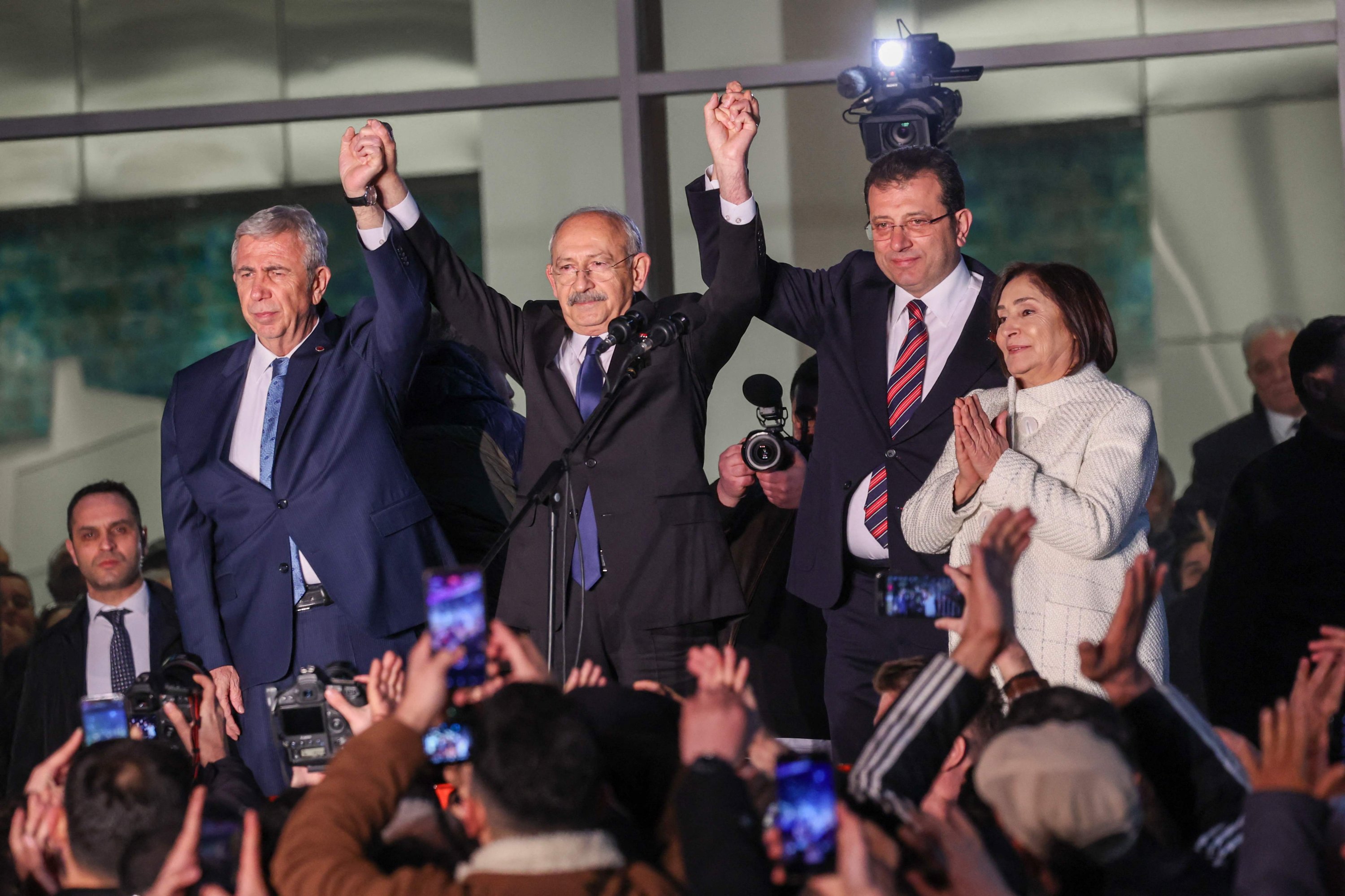
Kilicdaroglu flanked by Ankara mayor Mansur Yavas to his left, Istanbul mayor Ekrem Imamoglu to his right, and his wife Selvi farthest right. “Gandhi Kemal” as he is popularly known has promised the two mayors “executive vice presidential posts”. How this will work has not been addressed. (Photo: AFP)
A Seismic Shock
On February 6 2023, two consecutive high intensity earthquakes in the south of Turkey decimated much of that region. Over 50,000 died and millions more were left cold, hungry and displaced. An event like this should not be political, but it really does implicate the ruling party. Firstly, Erdogan became Prime Minister three years after the devastating 1999 earthquake in Western Turkey. A lot of the damage was attributed to a lack of building codes, meaning Erdogan campaigned on creating new laws and enforcing them. When it came out that most of the damage could be attributed to the government allowing contractors to circumvent building codes, they were met with waves of criticism.
For a brief time, social media was blocked in Turkey after the earthquake. The government claims it did this to prevent misinformation. Aside from this, there was outcry over the lethargic response. What’s especially significant is the fact that the affected region overwhelmingly votes for AK Parti. Now, this may very well change. When government officials visited affected regions, they were often booed away by the rightfully frustrated victims. The CHP has always had trouble expanding outside of its Mediterranean, upper class voter base, but the Southern earthquake victims might conclude that their government’s decisions have not just blighted livelihoods, but mortal lives themselves.

A man prays near a destroyed home in Kahramanmaras. This city was a strong support base for Erdogan, but this could change seeing the level of destruction the city has experienced (Photo: Nir Elias, Reuters)
Turkey’s Black Sheep
Turkey’s founding ideology centres on the idea of Anatolia as the Turkish homeland, but beyond the mountains in Eastern Turkey are the Kurds, a considerable part of the state’s population with their own language, history and culture. Their separate identity from the Turks has resulted in much conflict. As previously mentioned, Kurdish self expression was criminalized at many times during secular military rule, and many Kurds were victims of state violence. It was not only their ethnicity that caused a rift with the state, but the fact that Kurds are some of Turkey’s most religious citizens. When AK Parti came onto the scene, Turkey’s Kurds flocked to the party, and the party rewarded them aptly. Infrastructure projects greatly improved the quality of life in Kurdish regions, and Kurdish language rights were greatly expanded. Turkey even signed a ceasefire with the PKK (a Kurdish guerilla organization considered a terrorist organization by many countries) in 2013.
It’s worth reiterating that all good things come to an end. When Erdogan began doing worse in elections, he was forced to ally with the ultranationalist MHP, which has resulted in a reversal of much of the progress made for Kurdish rights. A recent example is the banning of a Kurdish language play called Beru, something unheard of in recent decades. In 2015, the ceasefire with the PKK broke down, and many Kurds switched their allegiances to the HDP. The government has alleged that the HDP is tied to the PKK. As a result, they have sacked 62 elected HDP mayors in eastern Turkey and appointed pro-government politicians to replace them. Because of the sour history between the two, Kurds rarely ever vote for the CHP. Yet a culmination of the problems that affect all Turkish citizens and Kurds specifically may prompt them to vote for Ataturk’s party. In fact, most sources claim that Kilicdaroglu is of Zaza Kurdish descent. If the CHP were to reel in Kurdish voters, it would be a historic change and one that could mark the beginning of a new trend.
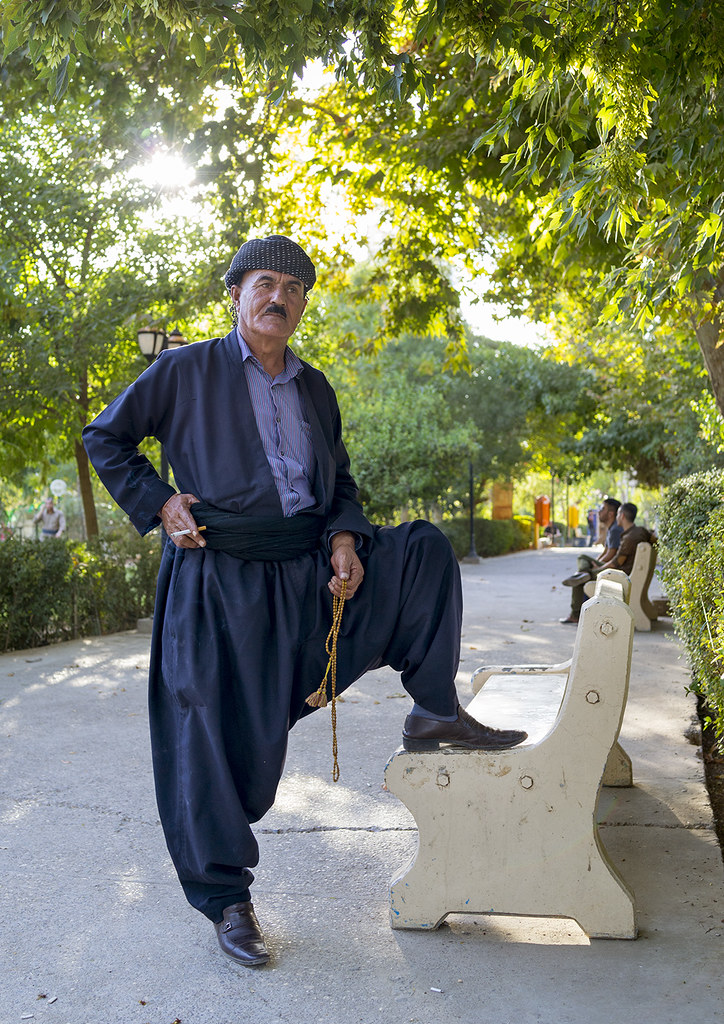
Kurdish man in traditional dress. Though Kurdish integration has rapidly increased under Erdogan, renewed crackdowns are once again putting their cultural freedoms in jeopardy. (Photo: Eric Lafforgue)
It’s One Thing To Govern, It’s Another To Rule
Kilicdaroglu has constructed a compelling campaign, but the question of what happens after is often neglected. He has promised the various important figures backing his campaign, including Imamoglu, Yavas and even ex Prime Minister Ahmet Davutoglu (served under Erdogan) the position of Vice President, along with a few other politicians. Anti-Erdogan Turks hope that this big tent alliance will attract votes from every class and region, but will all these colours of the political palette blend together? How will Kilicdaroglu balance his Vice President promises? How can members with vastly different ideologies agree on a concrete plan for the country?
There is also the question of a presidential system as opposed to a parliamentary one. Until 2017, the title of President was merely ceremonial; and parliament called the shots. When Erdogan moved from Prime Minister to President, he sought to change this. A 2017 referendum seeking to implement the presidential system in Turkey barely passed, and since then, the opposition has campaigned on restoring the old system. But will they follow through? Many polls indicate AK Parti may win parliament, yet lose the presidency. If so, would the Nation Alliance stick to their promise in spite of the disadvantage that poses? Even if the Nation Alliance wins parliament, polls indicate seats would roughly be split between the CHP, a party that leans left, and IYI Parti, a socially conservative party. The smaller parties range from communists to hardcore Islamists. Whether they can cooperate to deliver a bright future for Turkey remains to be seen.
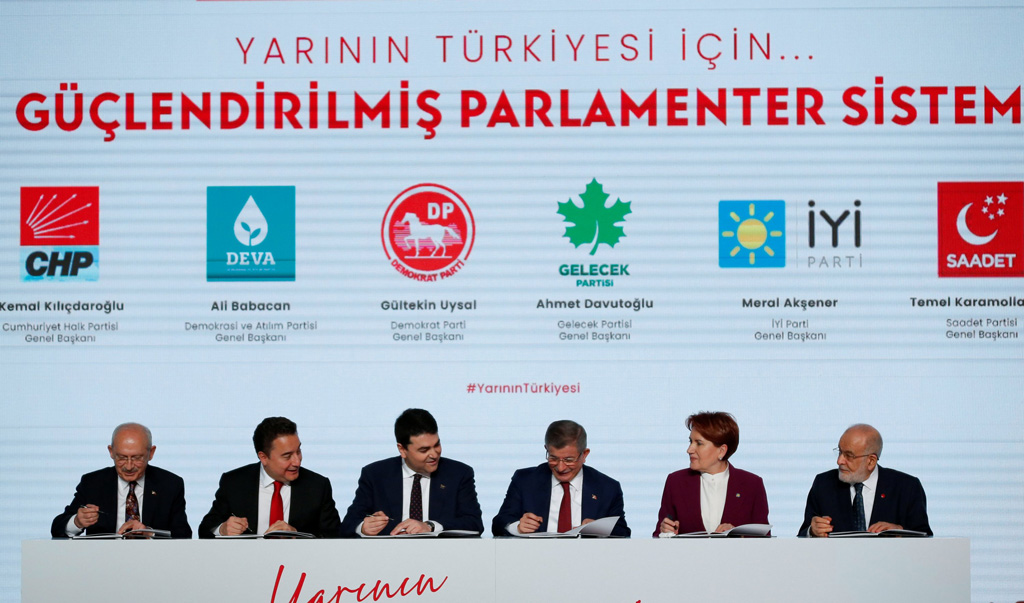
The Table”of Six”, plus the two mayors, will govern Turkey in the event of an opposition victory. The second largest of these parties, the IYI (good) Party, is pro-European and centre-right nationalist, Babacan and Davutoglu were once leading figures in Erdogan’s administration and the Saadet Party are Turkey’s most hardline Islamists. (Photo: Reuters)
Concluding Remarks
100 years after it was founded, the future of the Republic will be decided through the ballot and the box. Both sets of voters believe that THIS is the election that will guarantee their vision for their country is seen through. The opposition seeks to restore civil freedoms and a stable economy. Leaders from across the ideological spectrum have forged a bond in the aim of European integration and preventing their country from becoming a penniless pariah. For Erdogan’s voters, they aim to preserve a state they have built in spite of decades of political repression. They view this election as affirming their status as equal citizens. They view Turkey’s robust regional policy and differences with Europe as asserting the sovereignty of the country they see as inherently Eastern and Islamic.
Whatever happens on the 14th of May, there is one positive to take from all of this. Rallies for both candidates attract countless citizens as Turks from all walks of life are becoming politically involved. This is a nation that has not given up hope for their country, in spite of all the hardship it has faced in the past few years. God willing, Sunday’s election will show that Turkey is an educated country that can accommodate everyone’s viewpoint. It will show that Middle Eastern people can make a change not by fighting with weapons, but by raising their voices. God willing, the Turkish people will receive the good outcome they rightfully deserve, a reward for their undying spirit.