

By Mohammad Rasoul Kailani

Before the Civil War, Turkish-Syrian relations peaked. Now portrayed as enemies, Erdogan and Assad actually vacationed together in Bodrum in 2008. Would renewed Turkish-Syrian relations last, or is this masla7a in its purest form?
Despite a hardline approach against the Assad regime throughout the civil war, Turkish President Erdogan wants to make amends. Last August, Erdogan claimed his government “does not have such an issue as to whether to defeat Assad or not”, a strong contrast to ten years of funding, training and promoting Syrian rebel fighters. Now, Syrian and Turkish diplomats are renegotiating relations. Against the backdrop of a worsening economy, unpopularity of refugees and armed Kurdish separatists on Turkish borders, the Turkish opposition is pressuring their country to normalize with the Assad regime. As the ruling party’s poll numbers sink into oblivion, Erdogan’s government has to do something extraordinary to turn around Turkey’s fortunes, and theirs as well.
If this plan goes through, what are the ramifications? Only God knows, but the most likely scenario is visible from a mile away. If the Turkish-backed factions and regime makes amends, that leaves the vulnerable Autonomous Administration in North Eastern Syria cornered. Both sides resent the administration’s autonomy and the idea of an alternative regime near them. With the West more focused on Ukraine, there is quite a high chance of a joint offensive that would wipe “Rojava” off the map. Furthermore, Turkey might cut a deal to deport Syrian refugees back home in order to curb the anti-refugee sentiment. To his advantage, Assad stops his biggest neighbour from attempting to destabilize his rule. Additionally, he needs the return of citizens in order to rebuild a destroyed country. Surely, this is a great arrangement, and everyone benefits, right?
Not true. If anything, this quick pragmatism may be viewed as the saving grace of the Erdogan administration, but it has numerous flaws. To begin, normalizing with Assad comes at a large cost and may not yield enough benefits. Even if this prospective refugee deal goes through, there is no guarantee this will boost Erdogan’s popularity. It is true that anti-refugee sentiment is on the rise in Turkey, but the main criticisms of the government stem from its economic policies and its authoritarian nature. If these issues are not addressed, Erdogan will not gain the political leverage he needs. It will also have the effect of isolating hardcore Islamist voters who are more invested than other Turks in regional affairs and detest the Assad regime. This is a minority throughout the country, but a critical part of Erdogan’s electorate.
One topic the vast majority of the Turkish public agrees on is their utter loathing of the PKK (Kurdistan Workers Party) and its affiliates, which much of the international community considers a terrorist group. Though the PKK-affiliated militants in Syria pose a valid security concern to Turkey, there is no doubt they cause a rise in government approval ratings. Surely, Erdogan knows this. His approval ratings went up a few percentage points after offensives into the Afrin and Hasakah governments of Syria. At the moment, this is not enough. Polls that put Erdogan against any one of the three potential CHP candidates (Kilicdaroglu, Imamoglu and Yavas), show him trailing by more than ten percent, indicating that public disapproval can not disappear with the snap of a finger.
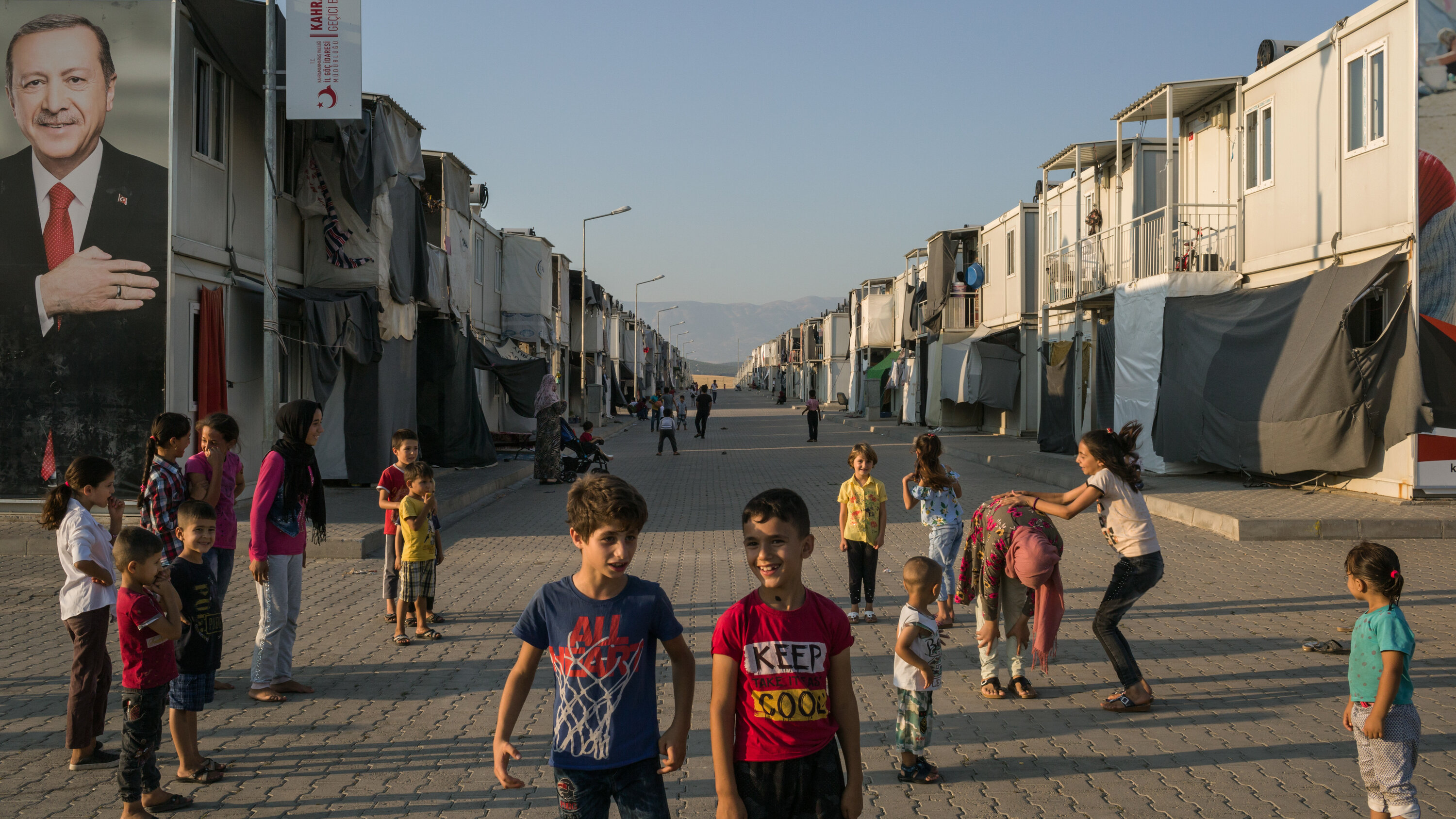
A key part of Turkey’s New Middle East policy is dealing with their refugee situation, as the country hosts more refugees than any other country globally. Whether this will come via legal or sinister means remains to be seen.
Finally, will refugees return? I have written about that question previously, but if the regime stays, there is only a slim chance this will be the case. The reasons the refugees left: lack of economic opportunity, a torturing dictatorial regime and an ongoing conflict are still present. There is little incentive for these refugees to go back, which would force the Turkish government to deport them. Logistically, this would be next to impossible. There are almost four million Syrian refugees in Turkey, most of whom are outside the camps, many of whom are unregistered. Even if authorities somehow rounded up all of these refugees, this violates international law. Article 33 of the United Nations refugee convention outlines that no state party “shall expel or return a refugee in any manner whatsoever to the frontiers of territories where his life or freedom would be threatened on account of his race, religion, nationality, membership of a particular social group or political opinion.”
Syria, where arrests are arbitrary and violence is common, definitely fits this criteria. Can Turkey afford to conduct a mass expulsion? Its image in the West has suffered in the last decade, and has only recently begun to recover after Turkey has heavily aided Ukraine in its fight against Russia. There is also the fact that most Syrians have already made their lives in Turkey; many run businesses which collectively contribute hundreds of millions to the Turkish economy. Not only does this reinvigorate the Syrian will to stay in Turkey, it also means mass expulsion might be economically detrimental.
President Erdogan is a smart pragmatist and tactful politician, yet this potential move will not turn around his fortunes. Though exacerbated by recent crises, the decline in his popularity has been on the downward trend for years; a quick maneuvering of diplomatic alliances cannot erase the Turkish public’s collective memory. If Erdogan goes through with this, he loses many of the voters from his core base, and if he does, it is unlikely the secular/urban sectors of Turkish society would forgive him for his past blunders.
As for Assad, the consolidation of Syrian territory back into his hands and the return of skilled Syrians would be a major boost in reconstruction efforts. However, even if Syrians begin to return home, who’s to say they will thrive? People need good environments to prosper. A cruel dictatorship ruling over a land choked by death to sanctions is not that environment. People would leave again and continue to do so. Perhaps Assad is hoping for this deal to go through, but you reap what you sow, and he will have to deal with the destruction he has dealt upon his country.
Disclaimer: The views and opinions expressed in this article are solely those of the author and do not necessarily reflect the views of 9awtak.com, its staff, or other contributors.