


An article exploring Saudi Arabia’s new leadership and their economic, political, and social policies.
Written by: Rashid Kassim
Introduction
Saudi Arabia, led nominally by King Salman Bin Abdul Aziz & De Facto by Crown Prince Mohammad Bin Salman has displayed a noticeable transition in economic and social terms. Middle Eastern media and Saudi Arabian media in specific has idolized Saudi Arabia and its leadership as exemplary, with peaceful and innovative leaders. Although there has been progress in some regards, it is not all flowers and roses.
In fact, the visible authoritarian rule in Saudi Arabia at the time of King Abdullah is no different from current times, which has been coated by small visible acts of what is considered to be social progression. Examples may vary from enabling women in Saudi to drive, relaxing some “modesty laws” and more. However, political repression, human rights violations, and social injustice has remained the trend for the Saudi monarchy. On the contrary, Saudi Arabia has showcased great economic development under its new leaders through the increase and distribution of various revenue streams, as well as its attempt at shifting from total dependency on income generated by petrol to co-dependence on alternative economic streams.
Thus, though Saudi Arabia hypocritically portrays itself as progressive in spite of its constant human rights abuses, it has propagated unprecedented economic development, an aspect not to be overlooked.
Human Rights Abuses
There is no doubt that human rights abuses have persisted in the Salman-Mohammad era. An example that showcases this would be Raif Badawi’s harsh consequences for starting a political debate platform. Badawi was sentenced to 1,000 flogs in public, as well as a ten-year sentence for “apostasy”. The justification given by the regime was Raif’s “unexemplary attitude towards Islam”. Though this sentence was given before King Salman’s rule, his government upheld and administered the sentence. To this day, he is banned from leaving the country.
In any case, the reasoning here is unjustifiable. Regarding Islamic Law, one may find that in reference to the Sharia, Dr. Jonathan Brown, the Director of Islamic Thought at the Yaqeen Institute states “in the Shari’ah, the aim of punishing apostasy from Islam is to protect the communal faith and social order of a Muslim state. If punishing apostasy severely is driving Muslims away from their religion, then this policy is undermining its own purpose.” This clearly identifies that such acts are not compulsory in the modern day, giving the Saudi government no religious grounds to back such a violating act of oppression.
Despite execution being a subjective topic to discuss, one may argue that execution is irrational for first offences, depending on the crime committed. According to the Saudi Justice System, one may be executed for acts of “armed robbery”. In fact, according to Amnesty International, a mass execution was held which resulted in the murder of 81 individuals who were Saudi Arabian citizens, and non-citizens for a variety of different offences. Offences varied from “acts of terrorism”, “murder”, and “armed robbery”, to “smuggling of arms”. In order to refrain from sparking a debate about the first two categorical charges, one may argue that it is inhumane and unacceptable in our day and age to hold a mass public execution, specifically for those with less incriminating charges. Moreover, a Saudi human rights organization reported 120 executions in the first half of 2022, double the number recorded last year.
One of the most prominent issues raised against the Saudi government was the murder of high-profile journalist Jamal Khashoggi, who was the General Manager at Arab News, as well as a journalist for the Washington Post and the Middle East Eye. Khashoggi was brutally murdered and dismembered in Istanbul, Turkey in 2018. The reasoning behind the murder was the negative traits and actions of the Saudi government that Khashoggi highlighted in his work, a reality check for foreigners looking in at the Saudi “reformation”. The Crown Prince did make remarks about the incident, mentioning that the murder was organized by eight “lower level operatives” without his or his father’s knowledge. On the contrary, a CIA report released shortly after the murder stated otherwise, clearly mentioning that the Crown Prince had not just been aware that an assassination was arranged, but had in fact encouraged and approved it.
The United Nations Human Rights Watch had pinpointed some of the human rights violations which were perpetrated by Saudi Arabia. Amongst the violations discussed were lack of “freedom of expression, association, and belief”, “Yemen airstrikes and blockade”, “criminal justice”, and finally inadequate rights for women and migrant workers.
To conclude this segment, despite less regional media attention on continued human rights violations in the Kingdom of Saudi Arabia, Mohammad Bin Salman has actually encouraged these violations in cases where the reputation of himself, his associates and his state are negatively depicted.
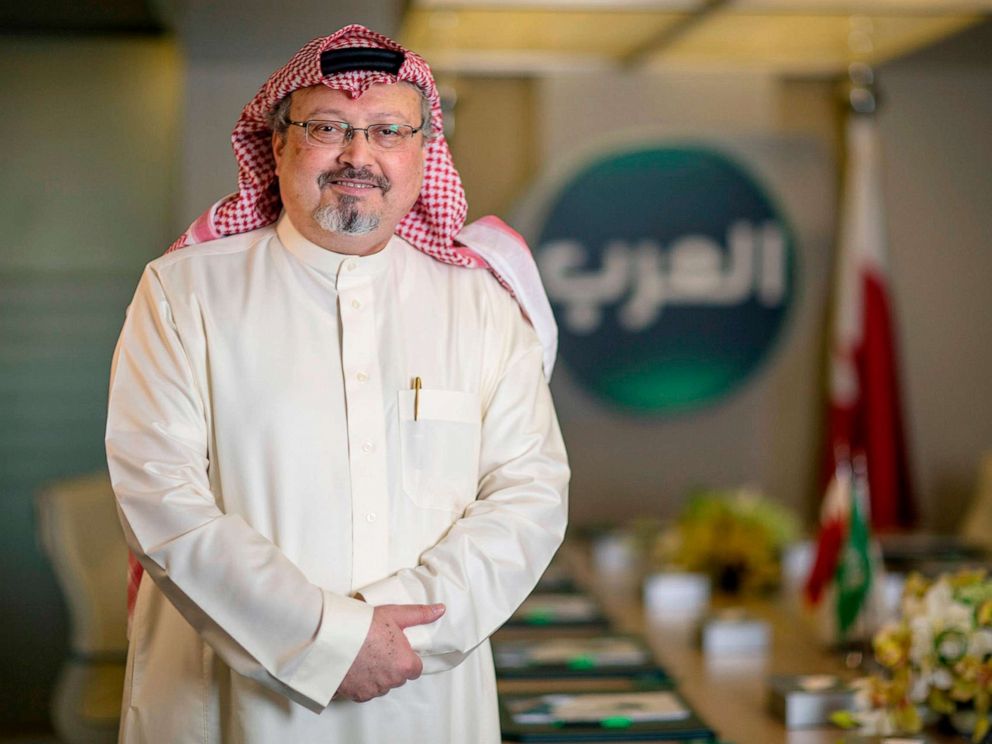
For over two weeks, Saudi Arabia maintained that Jamal Khashoggi, pictured here, left the Istanbul consulate, before surmounting evidence forced them to admit he had been killed inside (Image source: ABC News)
Maintaining Power Through Obsessive Control & Elimination
The De Facto leader Mohammad Bin Salman has had a tight grip on his position since the beginning of his reign. The Crown Prince has been able to do so through obsessive control and immediately eliminating potential risks. To begin with, his first act of position security was the detainment of 20 influential clerics and intellectuals who were considered to represent “foreign parties against the security of the Kingdom”. This act helped cement Mohammad Bin Salman’s position and hierarchical status by dissolving potential threats who possessed considerable social clout. In fact, according to the Guardian, the Saudi Arabian Justice System should have “Saudi prosecutors and judges strengthen procedural safeguards, to ensure fair trials, and quash convictions resulting from unfair trials”. This raises the question in this particular case as to whether Mohammad Bin Salman may have raised trumped-up charges against threatening and influential individuals in order to secure his position as Saudi Arabia’s shot caller.
Prime Ministers and Princes were also in Mohammad Bin Salman’s crosshairs and were finally erased from the picture at the Ritz-Carlton “Anti-Corruption Drive” fiasco, where 400 Tycoons, Ministers, and Princes were detained in the Ritz Carlton due to claims of corruption. According to the Guardian “statuses were discarded, assets seized, and business empires upended”. This secured the new leadership from potential threats to power, i.e high-status individuals in the country. Paranoia became action as Bin Salman was able to conventionally eliminate many impactful people within Saudi society through detaining such individuals on the grounds of corruption. Further evidence of Bin Salman’s grip on power lies in his control of the nations closed off justice system, which uses biased trials to lock up potential opponents. Transparency is dire as courts automatically rule in the favor of the Crown Prince rather than approaching the case objectively.
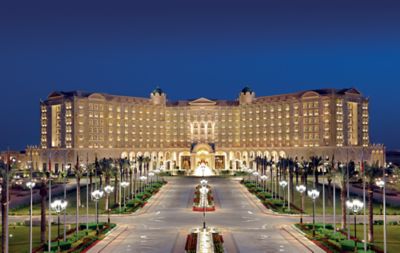
The Crown Prince detained hundreds of influential figures in Riyadh’s Ritz Carlton hotel, allowing him to maintain almost absolute control over the Saudi state (Image source: Ritz Carlton)
Economic Outlook
Though deserving criticism for ruling with an iron fist, it must be said that the De Facto leader sparked an economic transformation in Saudi Arabia, which aided the Kingdom’s transition from total dependence on petrol sales income to a more resilient and diverse economy. According to the Global Competitiveness Index, Saudi Arabia “has managed to advance 5 times since 2017, bringing the Kingdom’s ranking in the index to 36th globally, and first in the world in terms of reforms for working women”. In addition, Saudi Arabia has witnessed an increase in the domestic content in the oil and gas sectors, with an increase from 40% in 2015, to 55% in 2018. In fact, Saudi Arabia has shown support to local businesses by decreasing the tax rate which was once a 39.1% corporate taxation rate, which has now decreased to 20%.
According to ‘NCBI’ (National Center of Biotechnology Information), Saudi Arabia has drastically developed economically by diversifying its economy. Creating a more durable and resistant economy focuses on shifting from conventional energy production dependence to exploring new renewable energy sources, as well as a variety of new industries such as “human capital, and education, and investment in non-oil sectors such as tourism”.
The steps taken within the last five years have led to increased economic development and diversity. Coming to look at Saudi Arabia’s 2030 vision, all goals entail greater economic stability, increased job opportunities for an array of classes, and finally a less codependent economy in favour of amore independent national economy.
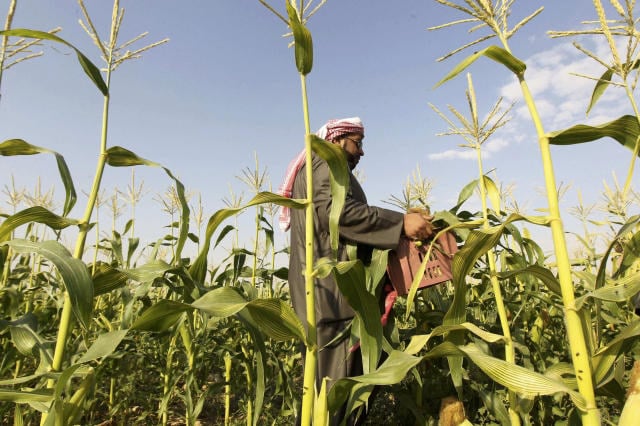
A farmer in Al Kharj, 77 kilometres from Riyadh. Saudi Arabia has invested heavily in order to diversify its economy as well as sustain its people better. (Image source: Arab News)
Conclusive Remarks
To conclude this article, Saudi Arabia and its leadership team may have seemed to suggest an increase of respect towards human rights, yet various cases prove otherwise given that ongoing violations may vary from interrogatory torture to extreme sentences to certain crime and many more examples which showcase minimal progression in terms of human rights.
In terms of political rule, Crown Prince Mohammad Bin Salman has maintained his position of power through neurotic control and a lack of mercy. Examples varied from trying scholars for “threats against the Kingdom’s security”, and having the judicial system find them guilty, to stripping power off influential individuals through the use of the closed-off anti-corruption court.
Finally, one positive aspect that Mohammad Bin Salman has brought to the table would be his strong economic development programs, which include more national inclusivity and less dependence on foreign nations, instead trying to independently sustain the Saudi economy. The result is one of the largest economic transitions from one economic backbone (the petroleum industry) to a huge diversification program that strengthens and introduces new sectors into the Saudi economy.
___________________________________________________________________________________
About The Author:
Rashid Kassim is an American & Jordanian citizen born on November 6, 2004, of Palestinian descent. He has received his high school education in Amman, Jordan in the International Academy of Amman, and is currently receiving his Bachelor of Arts degree in political science at ‘Loyola Marymount University’ in Los Angeles, California.
___________________________________________________________________________________
Disclaimer: The views and opinions expressed in this article are solely those of the author and do not necessarily reflect the views of 9awtak.com, its staff, or other contributors.